Context
The company was growing fast — more orders, new European markets, B2B and B2C. Service couldn't keep up, and customers complained. Sales, the call center, technicians, management and service each worked in their own tools: spreadsheets, a third-party CRM, WhatsApp, paper forms. Everyone saw only their part of the customer's journey. The goal: one system where every employee works and sees the whole picture.
From rules to code
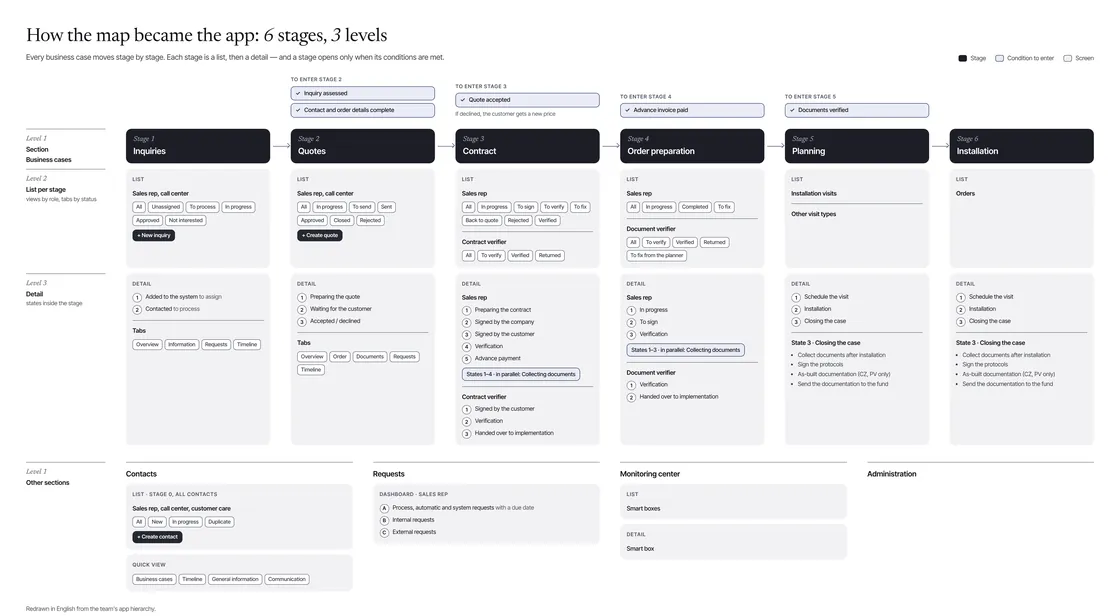
Find every touchpoint first. Information about a customer got lost between people: sometimes sales talked to them, sometimes a technician. There was no map. I pieced together how the company really worked, interview by interview with each department, until I had the whole happy path: 9 stages from a new lead to a connected system, and 9 roles — sales, customer care, verification, back office for planning, subsidies and distribution, installation crews, PV system designers and finance — with what each role does and produces at every stage.
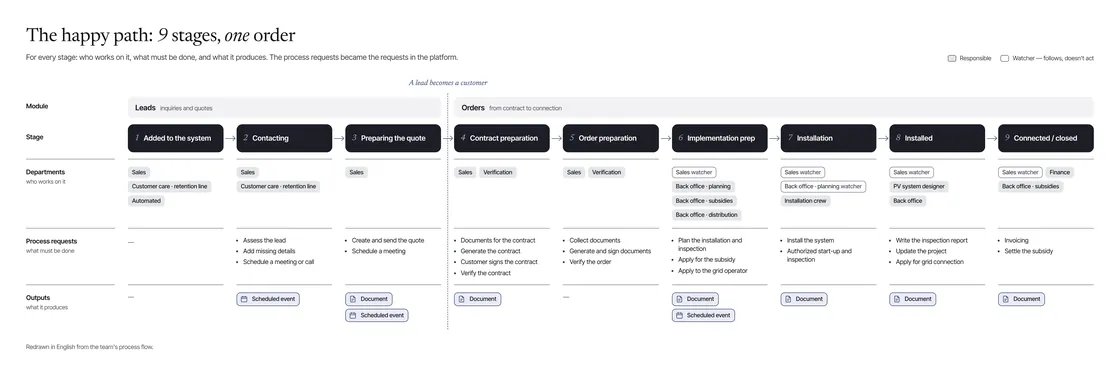
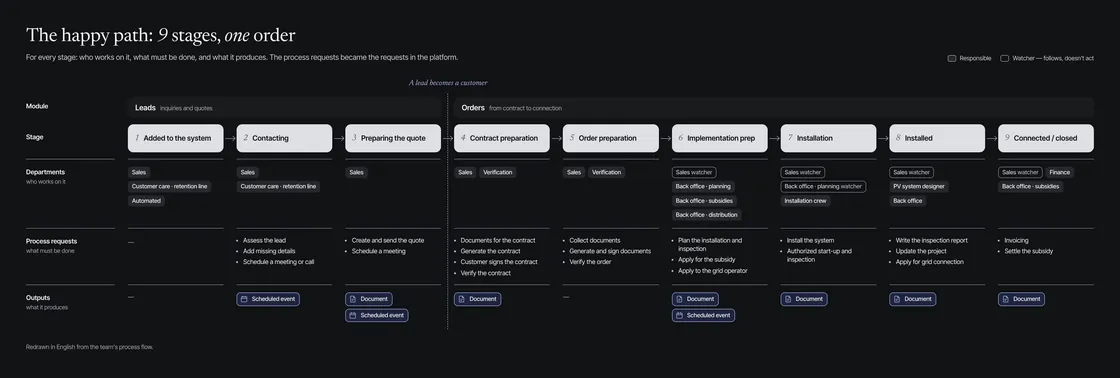
The process wasn't a line. The company helped customers get state subsidies, so many steps ran in parallel, and an order often went back to an earlier stage. The order timeline had to allow statuses, parallel steps and loops.
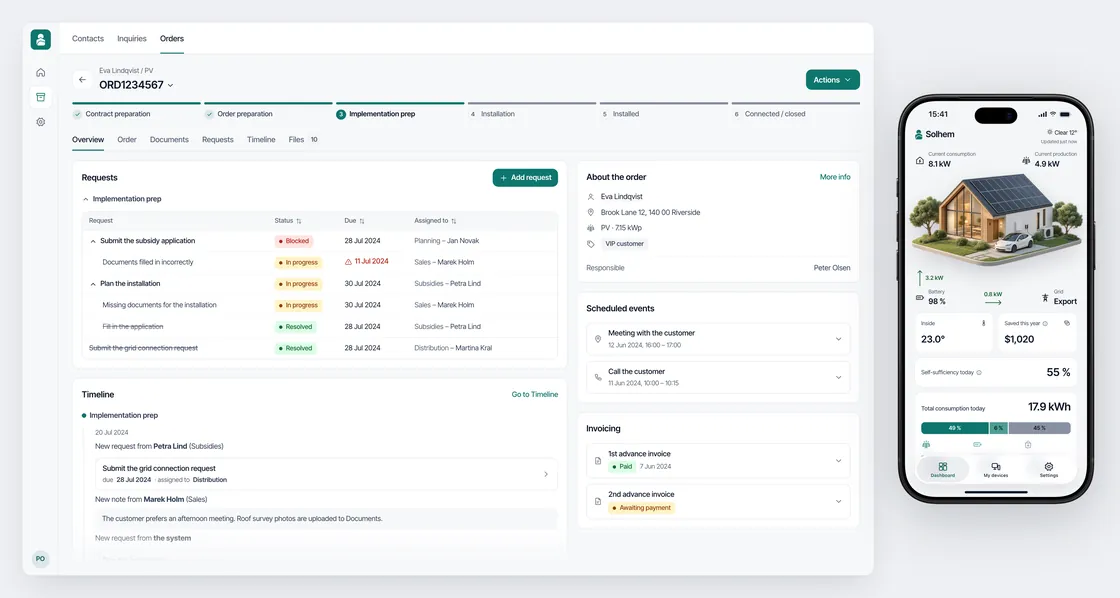
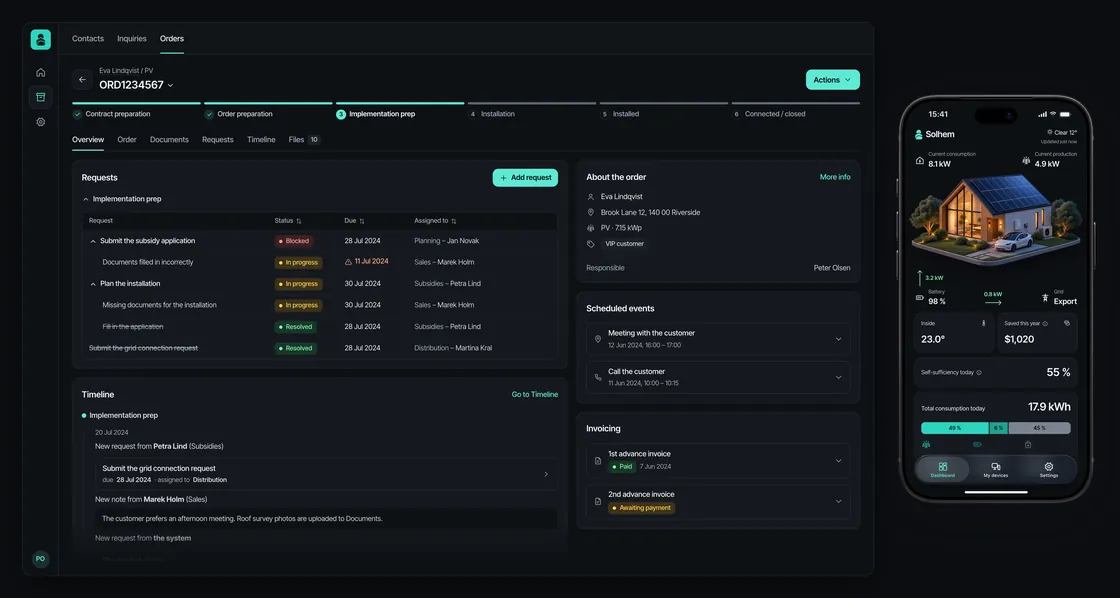
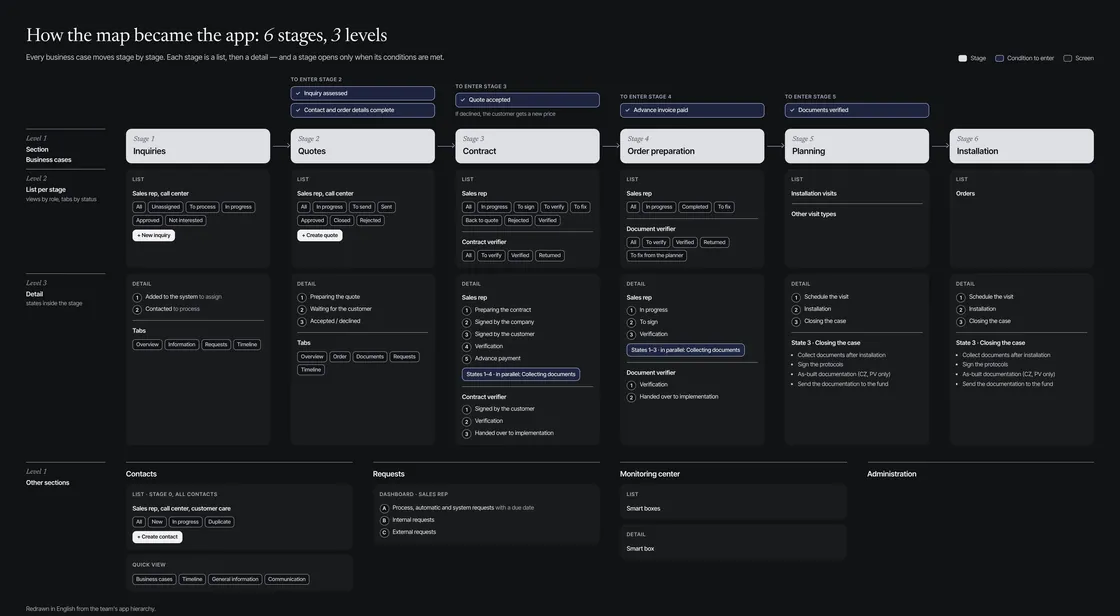
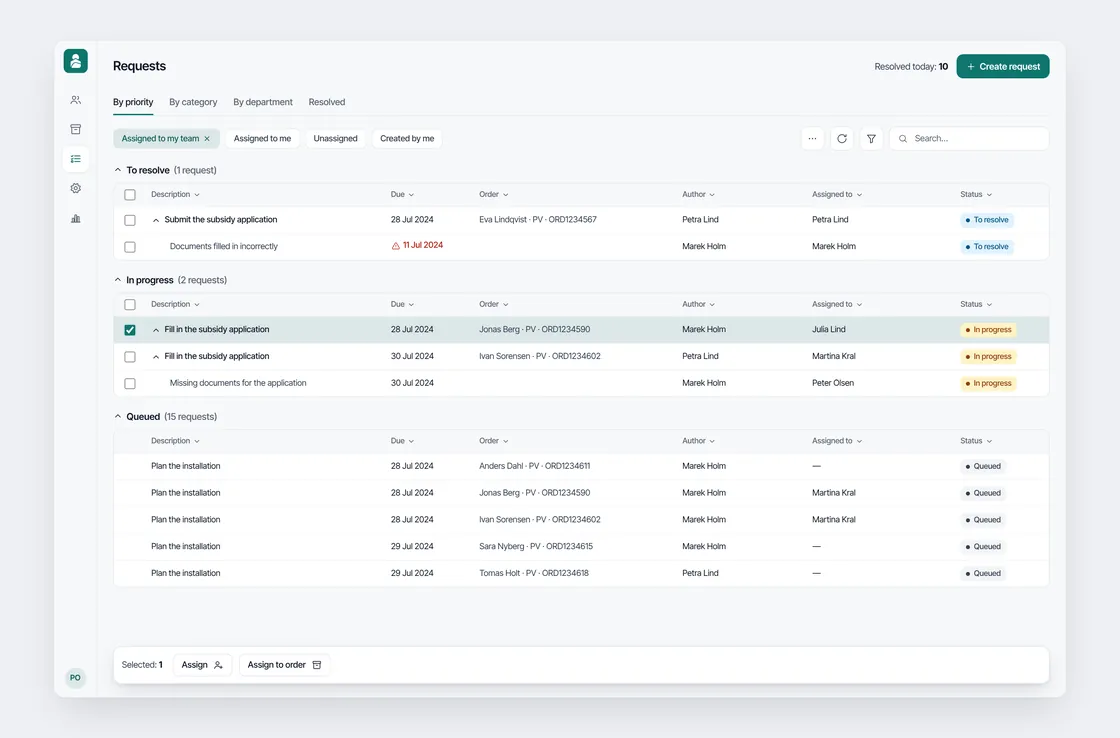
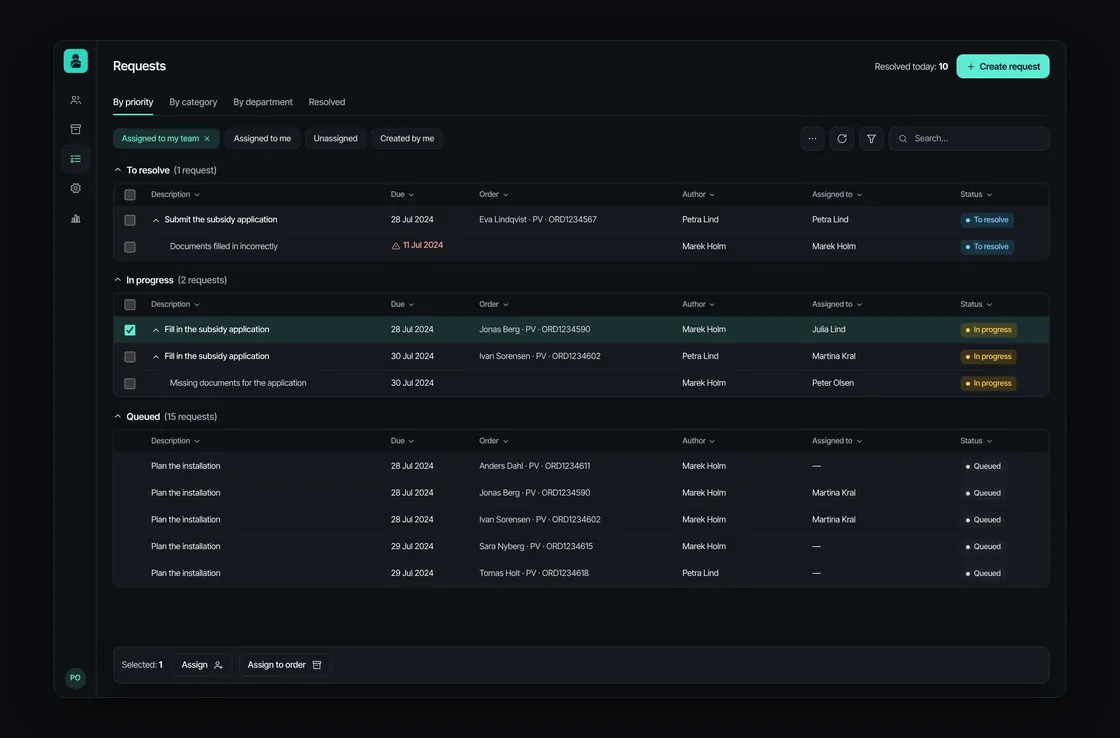
One structure for every stage. In the app, the 9 stages of the map became 6 stages of a business case, from inquiry to installation. Each stage opens as a list, then a detail with tabs for the order, documents, requests and the timeline. To move to the next stage, conditions must be met — an accepted quote, a paid deposit, verified documents. Advanced filters, tables and statuses help each role find its work first.
A design system for developers. I ran the design system. It was atomic: tokens, components with all their states, rules for when to use them and when not. Everything ran on Figma variables, which made it easier for the 8 developers to implement. I handed work over as Figma designs plus documentation of how each part works, and stayed close to the developers through daily stand-ups and demos.
The hardest part: technicians
Technicians weren't used to working in a system and didn't want to. They talked in WhatsApp, wrote notes on paper and filled in a lot of forms. Adoption was slow, and it took many training sessions. For a technician, sending a photo in WhatsApp is simply easier — I understood that. But the company needed every handover and every document recorded in one place.
Anatomy of a decision
Copy the forms — or redesign the work?
A form shows what one person writes down. It doesn't show how a project passes from one team to the next — and that handover was exactly where information got lost. Notes, requirements and technical documents moved from paper into the order.
Research
Weekly meetings with the owners and with the employees I was designing the platform for. Group and individual interviews before, during and after implementation. Prototypes, usability tests, iterations. What I learned didn't end up in a report — it became the process map and the app structure above.
Result
The rating rose during my time on the project — a result of the whole company's work. The company planned to offer the platform to its subcontractors too.
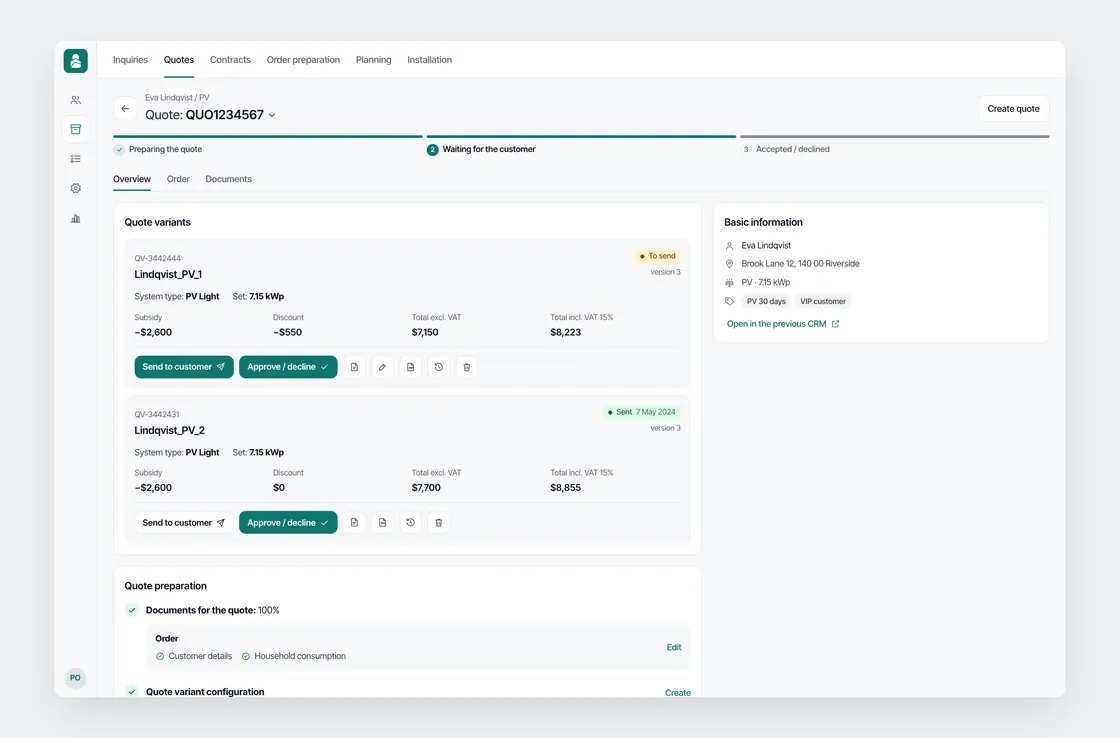
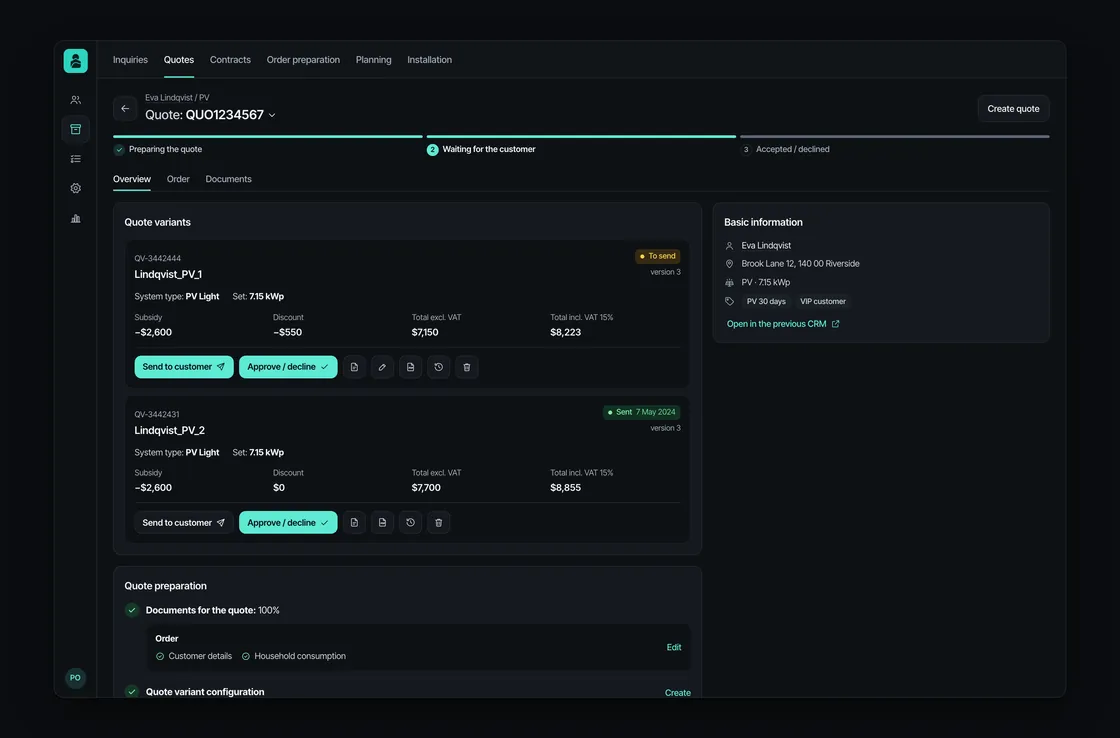
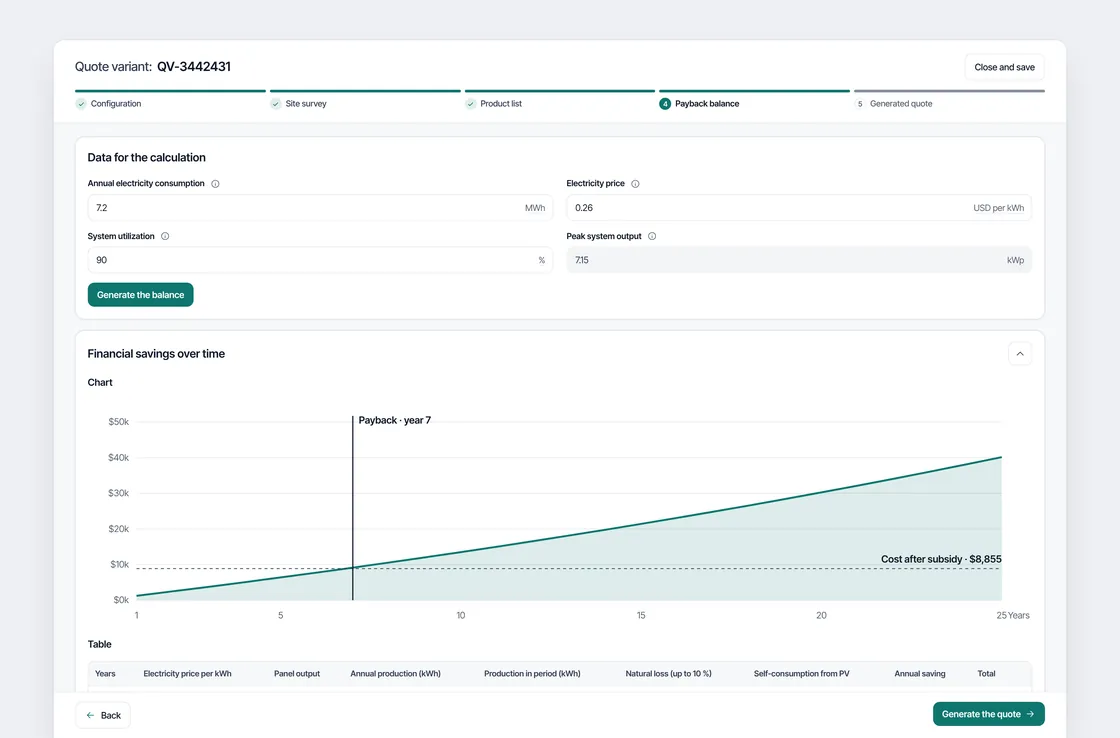
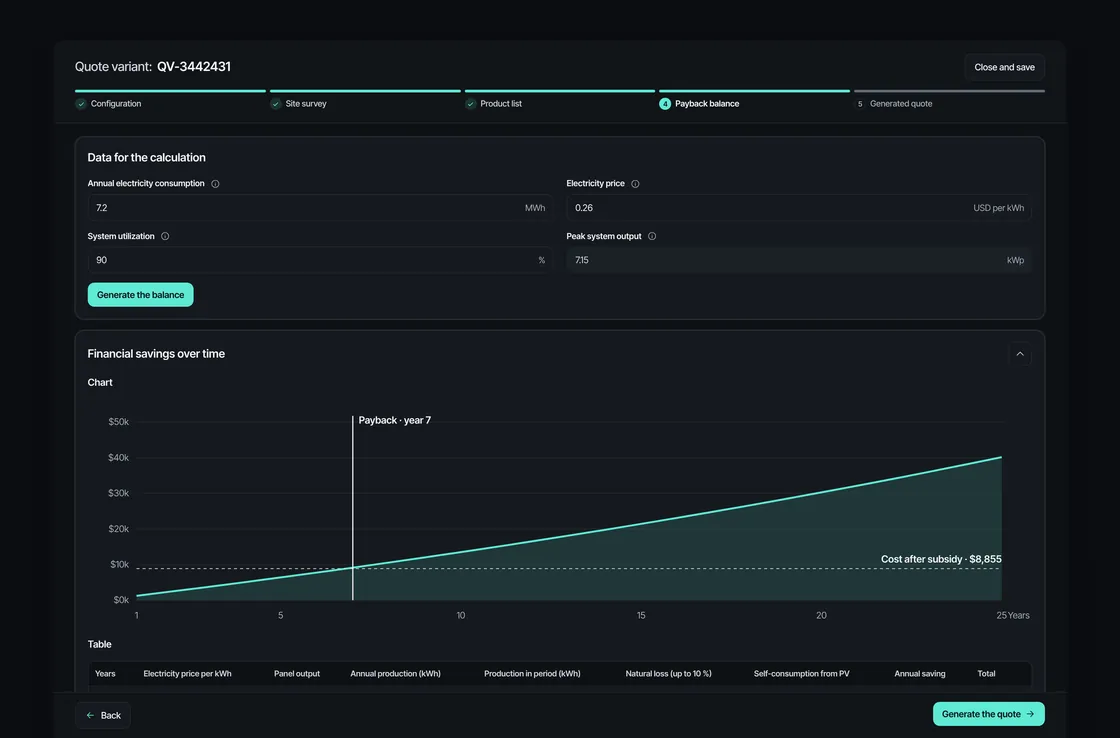
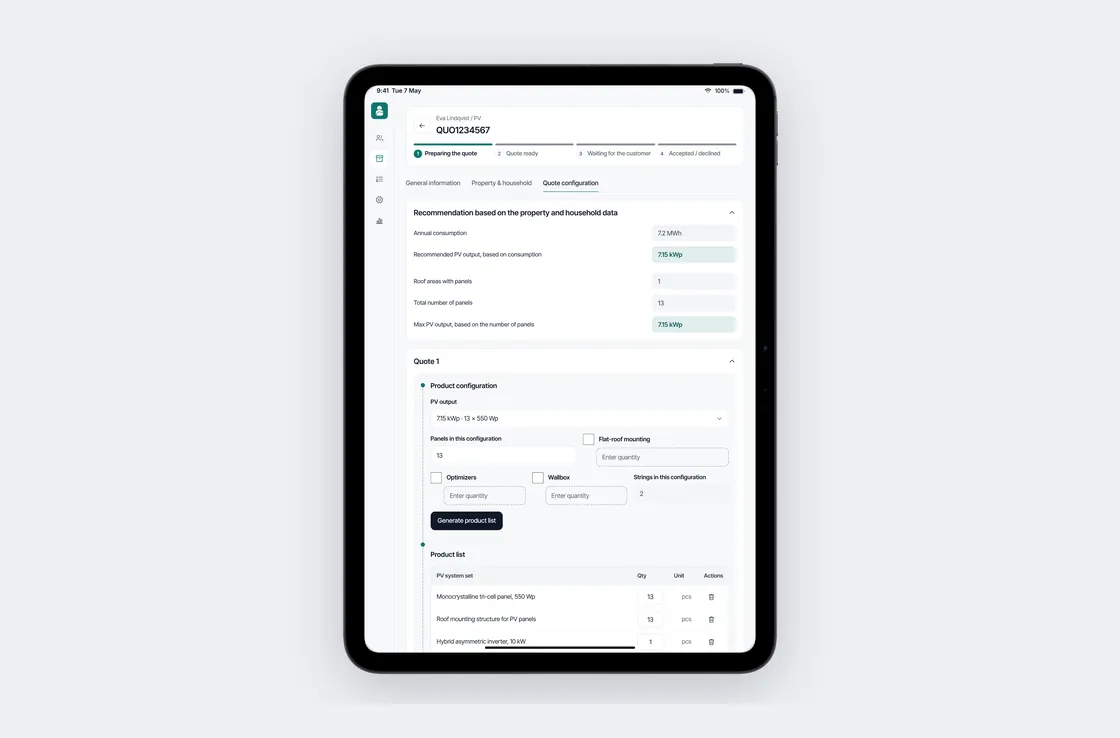
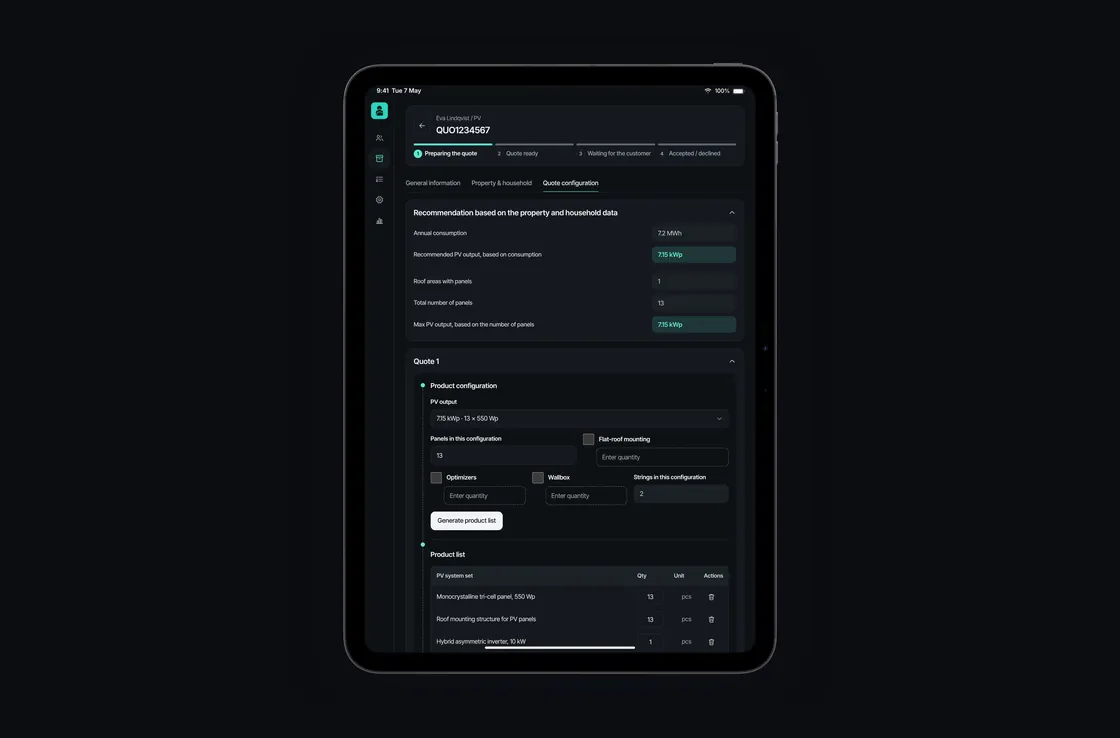
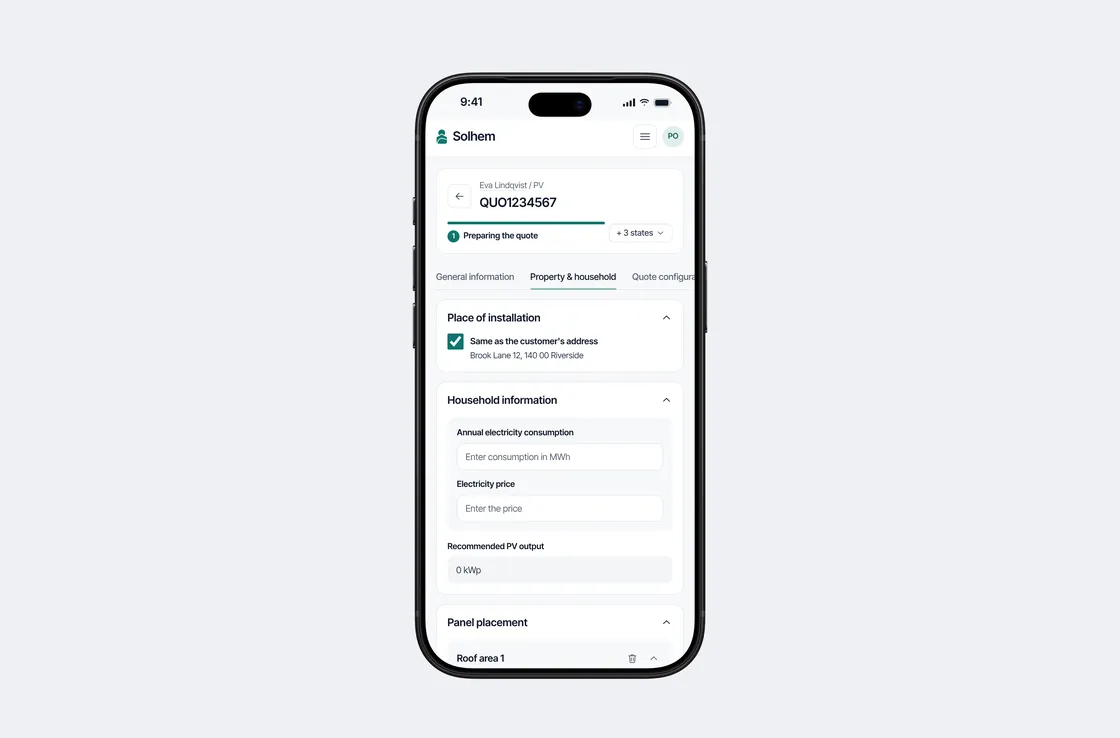
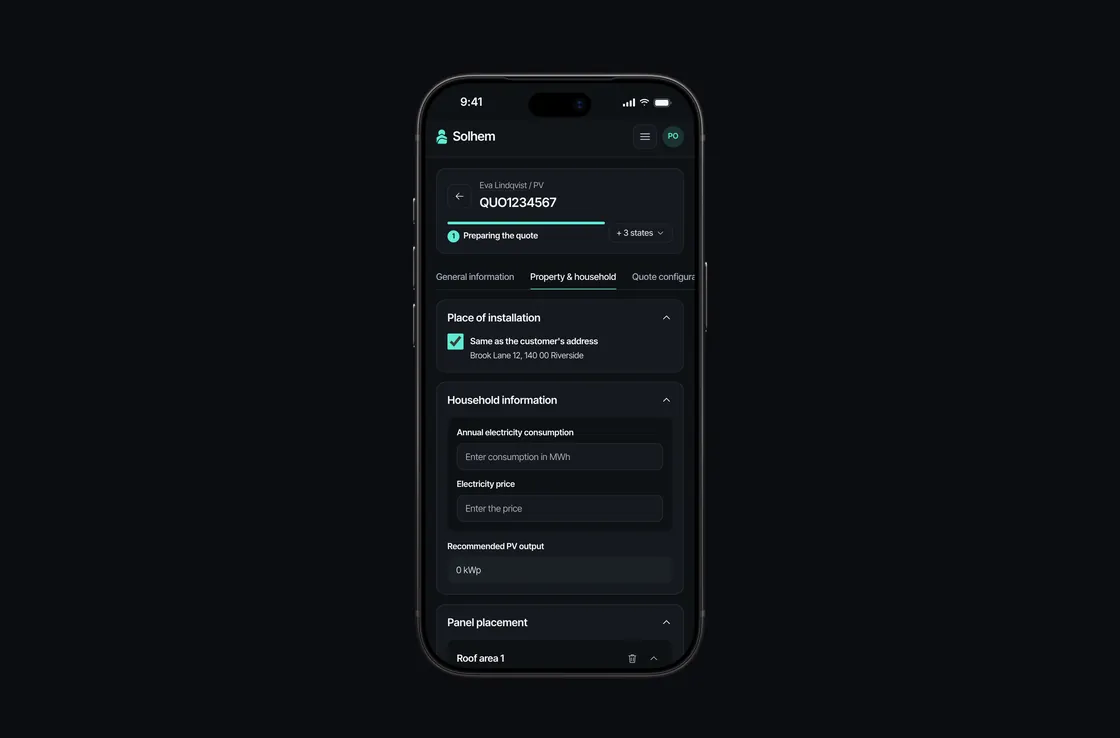
The same quote works on a tablet and on a phone.
Also designed
I also worked on these parts of the platform.
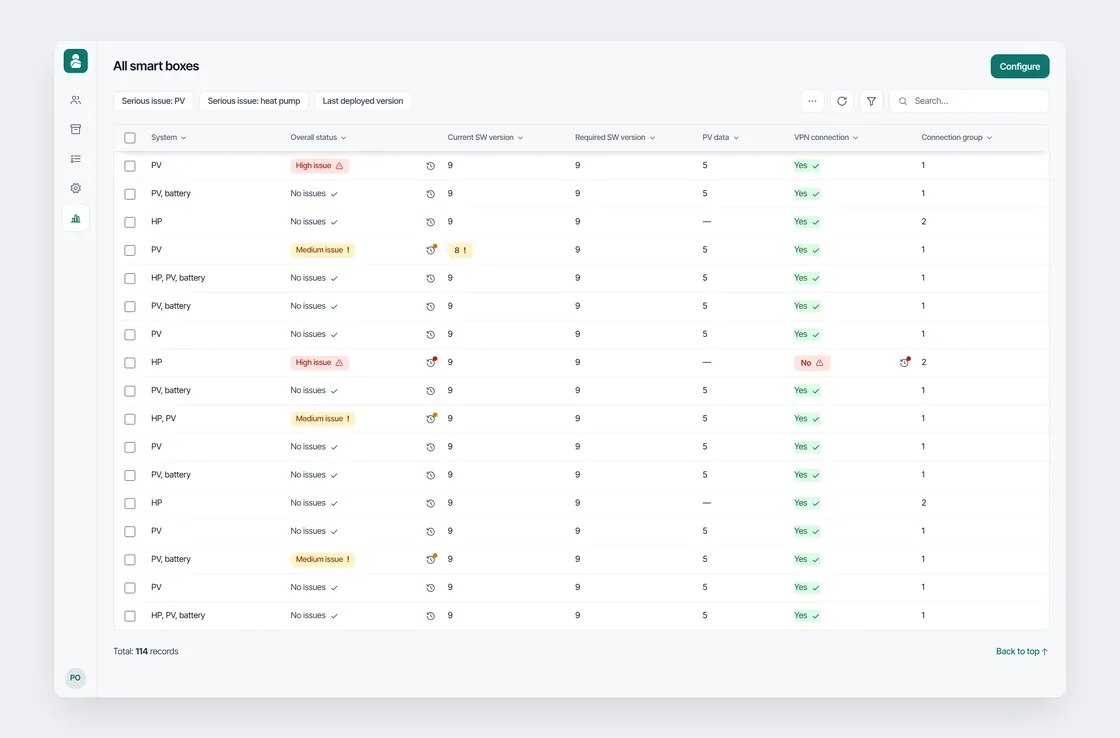
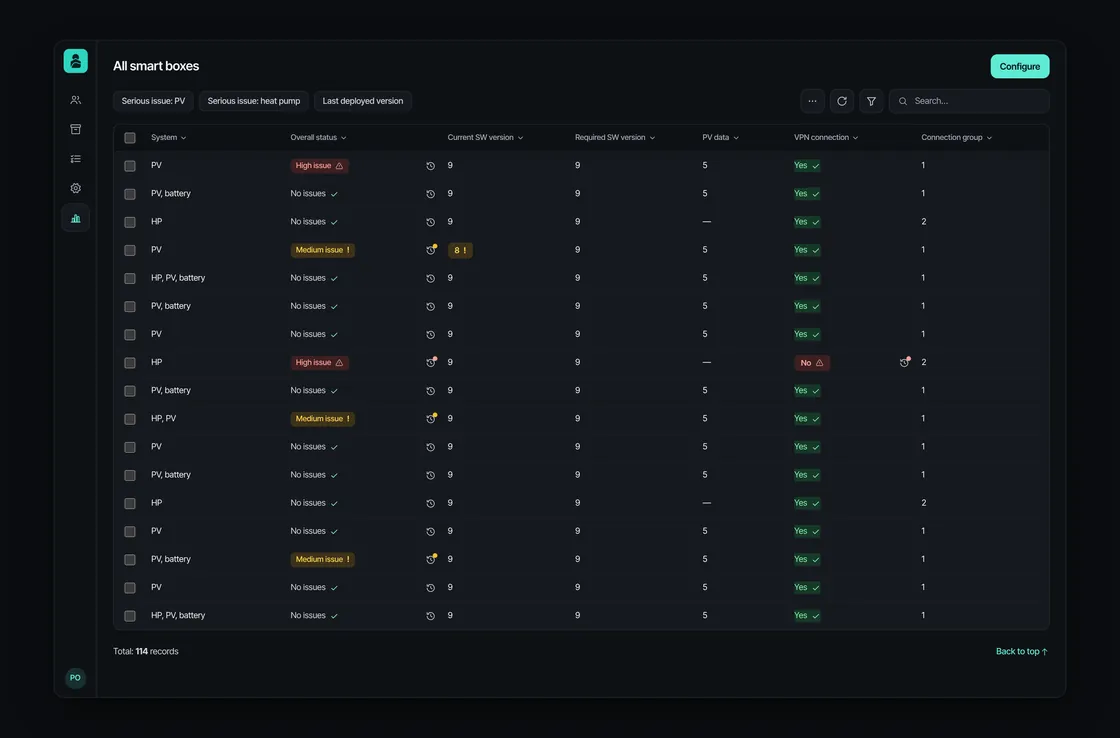
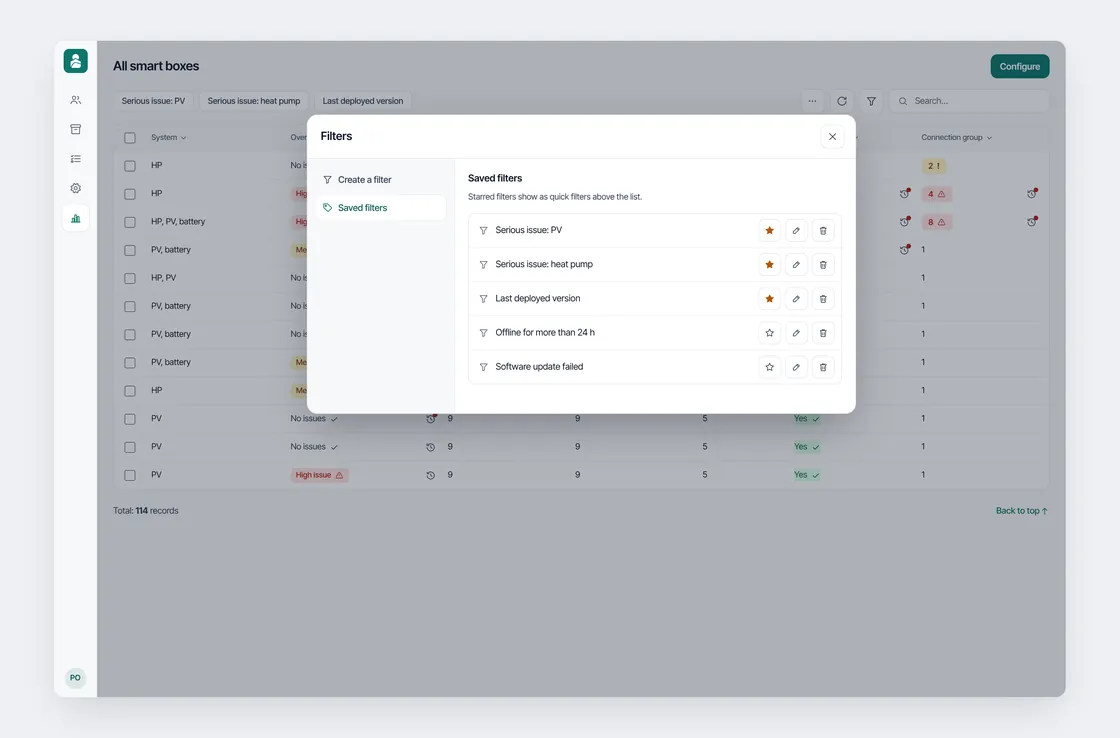
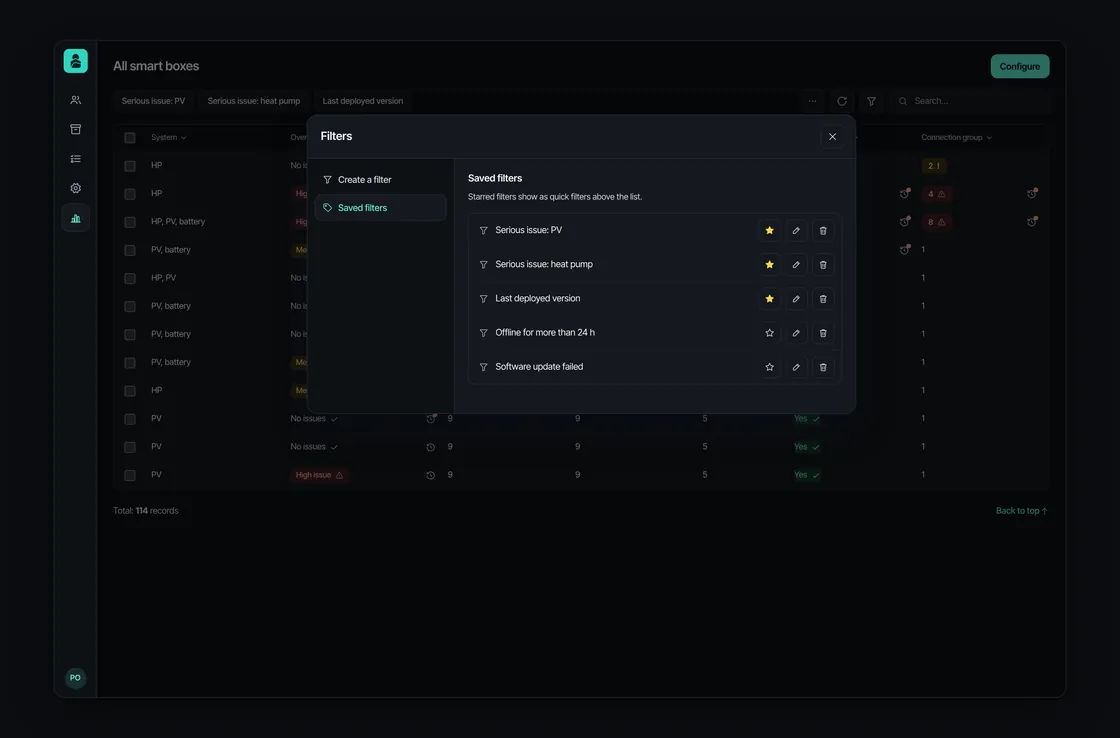
Monitoring center
Every customer's device, at a glance
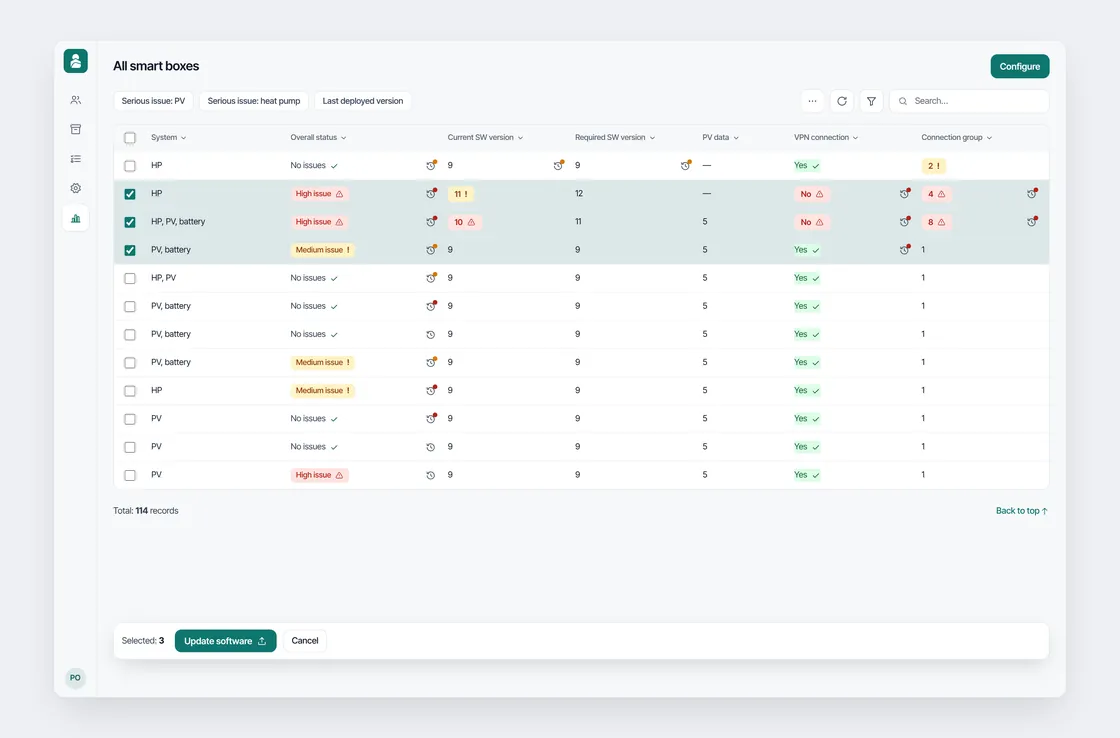
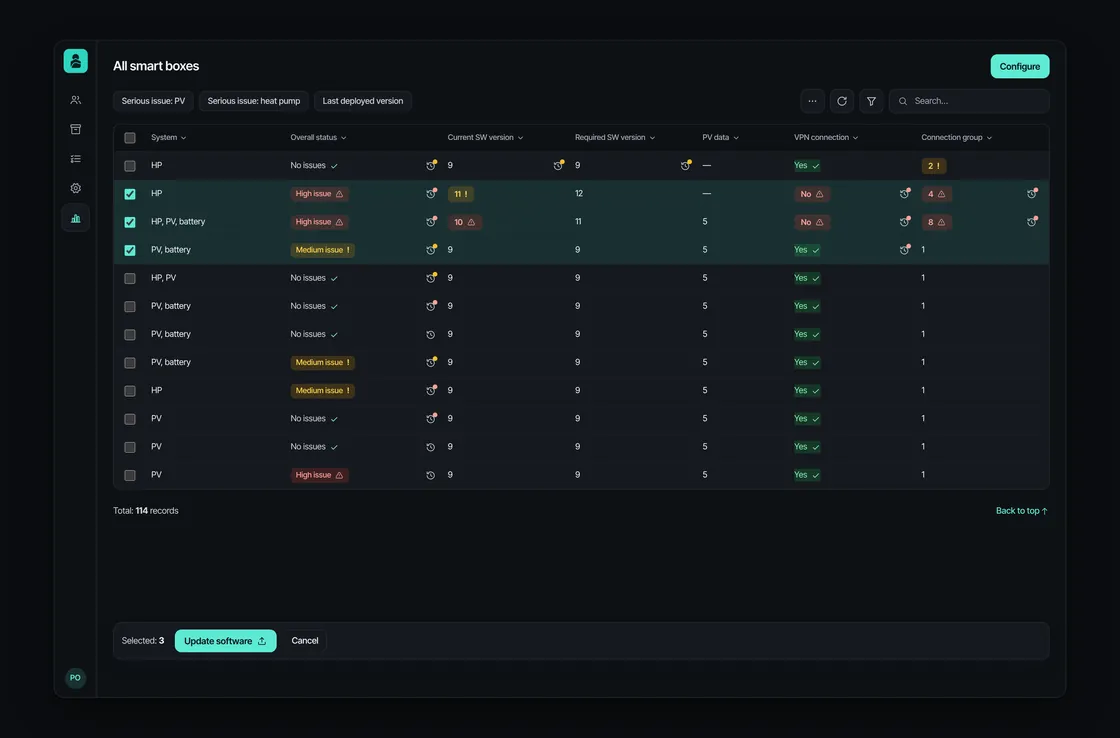
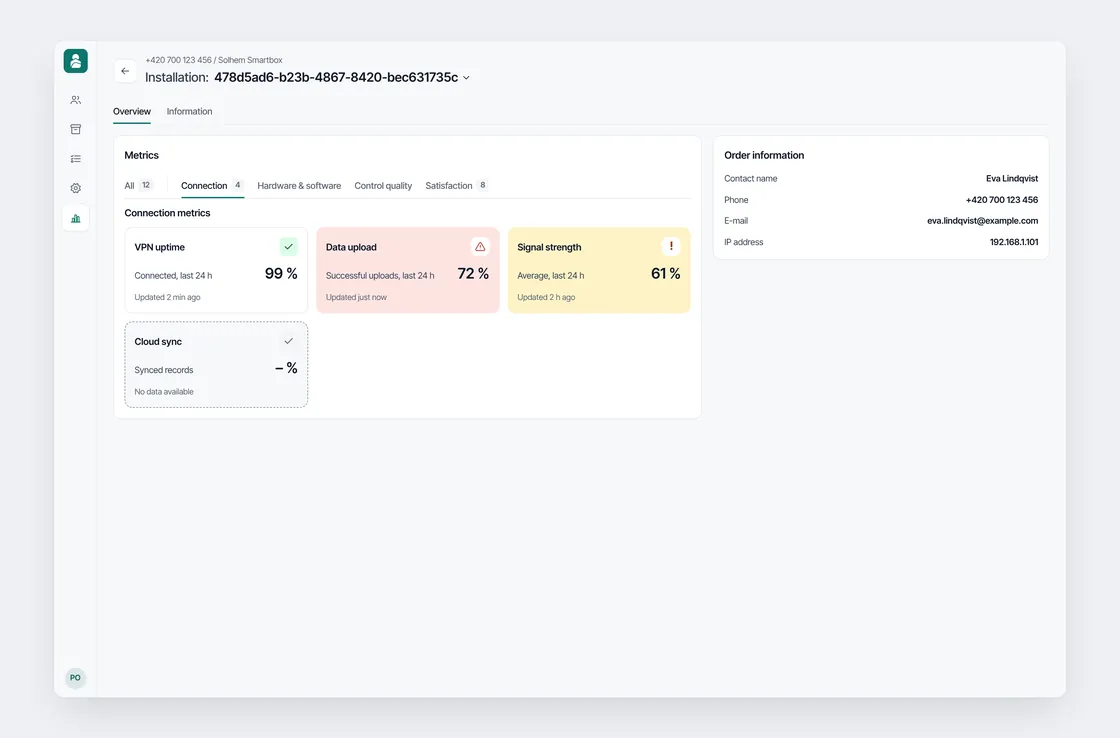
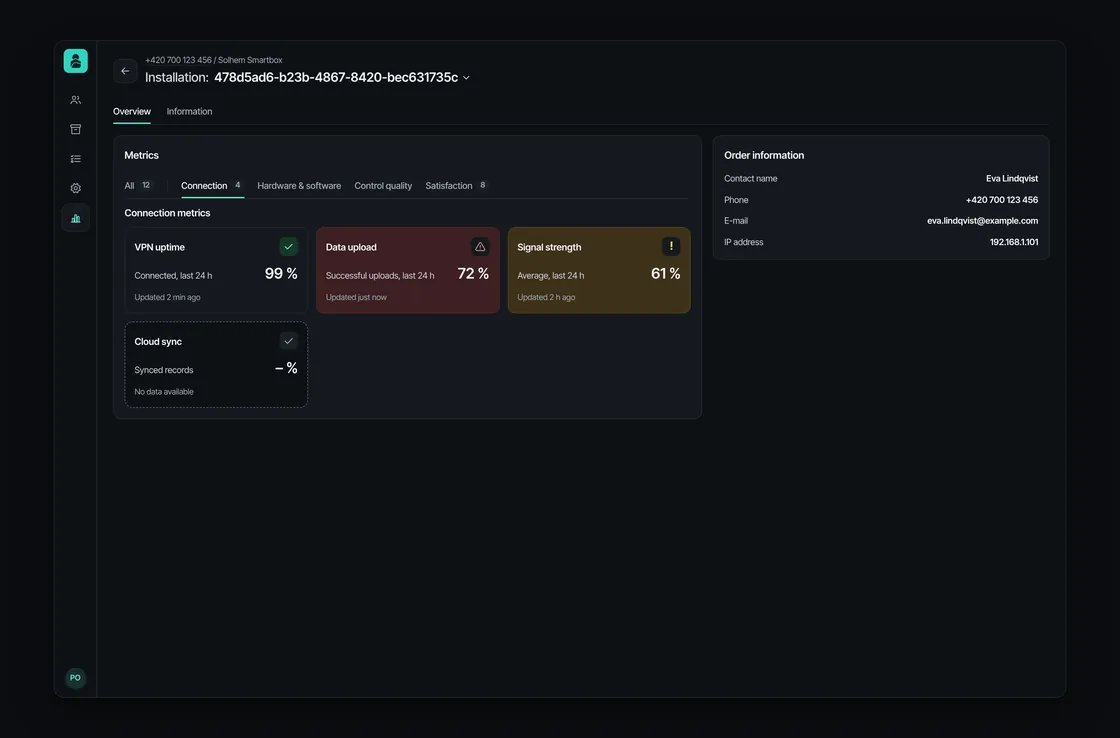
A module of the platform for the service team: heat pumps, solar panels and batteries of every customer — their status, software and connection.
- Advanced filters and saved views — each person finds their devices without rebuilding the filter.
- Bulk software updates — select many devices, update, see the result.
- Responsive status cards — three columns on desktop, two on a tablet, one on a phone.
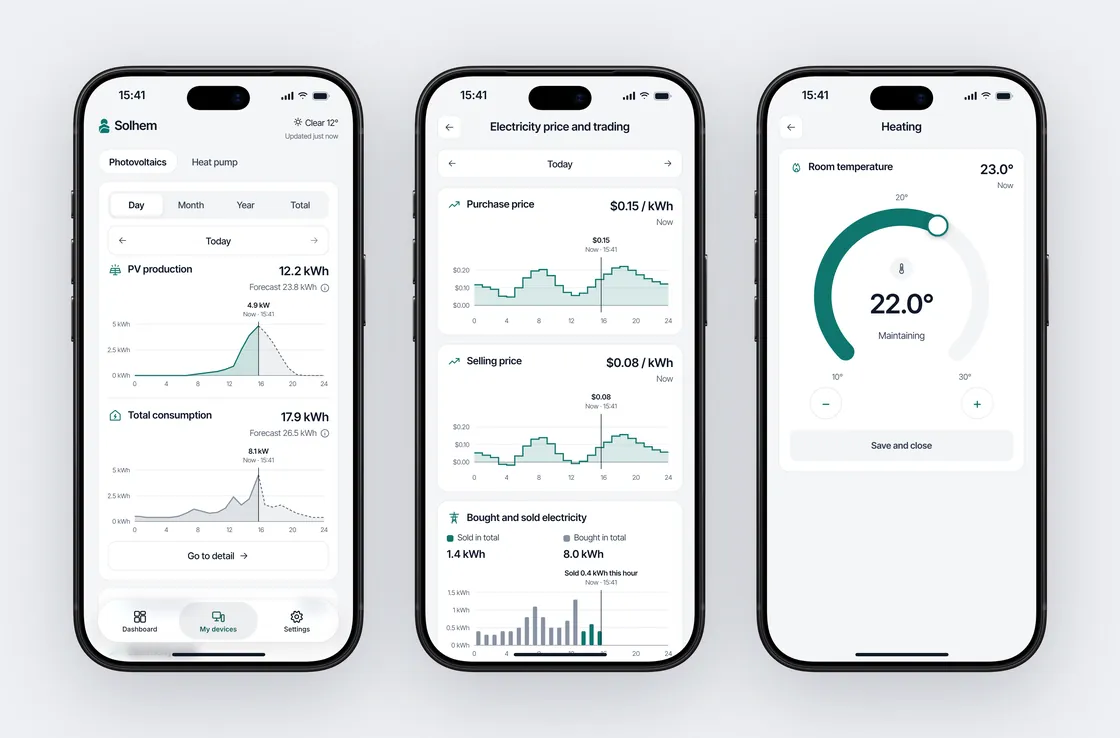
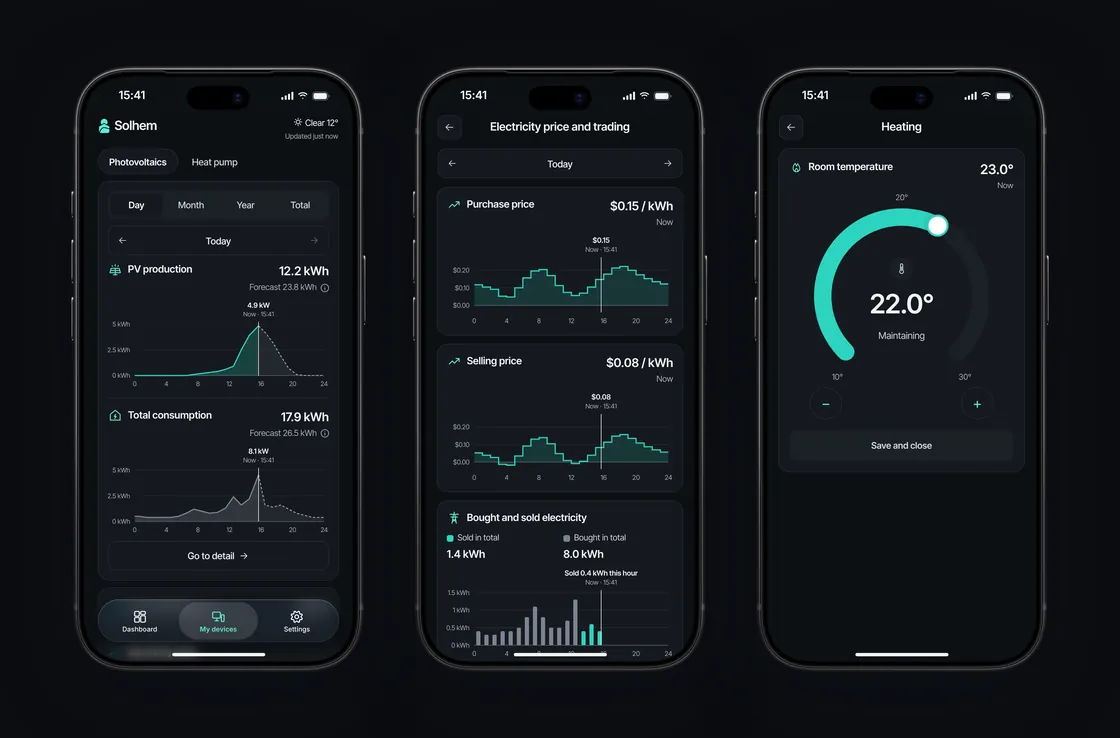
Customer app
Energy data for people who aren't technical
I worked on the mobile app where customers see how much energy their devices produce and use; a graphic designer drew the visuals. The charts had to be as simple as possible.
Call center tool
The right order on screen when the phone rings
About 10 people took around 300 calls a day. An incoming call would open the customer's order, so the operator could answer right away.
Reflection
A messenger will always be easier.
If a system is going to replace it, the most common task has to be just as fast — that's where I'd start next time.